
Modern food production focuses on quality, convenience, and long shelf life. Consumers also want products with natural flavors and recognizable ingredients. This trend has increased interest in advanced food preservation technologies. One important technology is freeze-drying, also called lyophilization.
Freeze-dried fruit is produced through a controlled low-temperature drying process. This process removes moisture while protecting many natural characteristics. The result is a lightweight, crunchy, and convenient fruit product. It can be used in retail, food manufacturing, and food service.
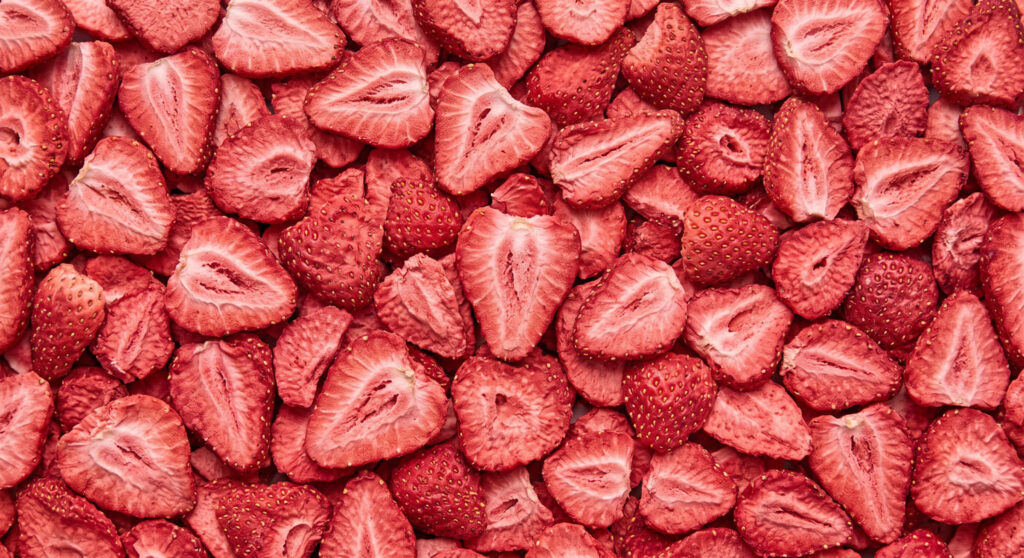
What Is Freeze-Dried Fruit?
Bienfo Freeze-dried fruit starts with fresh and carefully selected fruit. The fruit is usually cleaned and prepared before processing. It is then frozen at very low temperatures. The frozen product enters a specialized vacuum drying chamber. Inside this chamber, ice changes directly into vapor. This process is called sublimation. It removes water without requiring conventional high-temperature drying.
The process can help preserve the fruit’s original structure. It can also maintain much of its natural flavor.
The final product contains very little moisture. This creates a crisp texture and lightweight structure.
Different fruits can be processed using this technology. Common examples include strawberries, raspberries, bananas, mangoes, apples, and blueberries. Other fruits can also be processed with suitable production parameters.
How Is Freeze-Dried Fruit Produced?
The production process includes several important stages. Each stage affects the final product’s quality and appearance.
1. Fruit Selection
Production begins with selecting suitable fresh fruit. Manufacturers usually evaluate ripeness, appearance, size, and quality. Damaged or unsuitable fruit is removed during preparation. Fruit quality directly affects the final product. Therefore, careful raw material control remains essential.
2. Washing and Preparation
Selected fruit is cleaned before further processing. Depending on the fruit, peeling may also be required.
Some fruits are sliced into specific sizes. Other fruits can remain whole during processing.
Consistent cutting helps create more uniform drying results. It can also improve product appearance and packaging performance.
3. Freezing
Prepared fruit is frozen at very low temperatures. Fast and controlled freezing helps create suitable ice crystals. The frozen structure becomes important during the drying stage.
Freezing also prepares the fruit for vacuum processing. The product remains solid throughout the initial drying stage.
4. Primary Drying
Frozen fruit enters a vacuum chamber. Pressure is reduced significantly inside the chamber. Heat is then applied under carefully controlled conditions. The ice inside the fruit begins sublimation. Ice changes directly from solid form into vapor. Liquid water does not form during this stage.
This process removes most of the frozen moisture. Temperature and pressure require careful monitoring throughout production.
5. Secondary Drying
The second drying stage removes remaining moisture. This stage helps achieve the desired final moisture level. It also improves product stability during storage. Proper secondary drying supports longer shelf life. However, packaging remains important after processing.
6. Packaging
The dried product must be protected from moisture. Moisture can quickly affect its crunchy texture.
Therefore, manufacturers use suitable moisture-resistant packaging materials.
Oxygen control can also support product quality. Some products may use oxygen absorbers or modified packaging systems.
What Are the Benefits?
Freeze-drying offers several advantages for fruit manufacturers. It provides convenience without requiring traditional wet storage conditions.
Long Shelf Life
Removing moisture helps reduce conditions supporting microbial growth. Proper packaging can further extend product stability. Storage requirements depend on processing and packaging conditions.
Manufacturers should always define shelf life through product testing. Storage temperature and humidity can also affect performance.
Lightweight Product
Most of the fruit’s water is removed during processing. This significantly reduces the product’s weight. Lower weight can simplify transportation and storage. It can also support convenient portion sizes for consumers.
Natural Flavor
The process can preserve much of the fruit’s original flavor. It does not require deep frying or heavy processing. Many products therefore maintain a recognizable fruit character.
Flavor intensity can vary between different fruit varieties. Processing conditions can also influence the final taste.
Convenient Consumption
The finished product can be eaten directly. It does not usually require refrigeration before opening.
This makes it suitable for many everyday applications. Consumers can add dried fruit to breakfast or snacks. It can also be used in desserts and beverages.
Nutritional Considerations
Fresh fruit naturally contains water and various nutrients. Drying changes the physical structure by removing that water. However, the nutritional profile depends on the fruit and process.
Freeze-drying does not automatically make every product nutritionally identical. Different fruits naturally contain different amounts of nutrients. Added ingredients can also change the final nutritional profile.
Consumers should check product labels for accurate nutritional information. Manufacturers should provide clear ingredient and nutrition declarations.
Where Can It Be Used?
This type of dried fruit has many commercial applications. Its lightweight structure creates opportunities across several food categories.
Retail Snacks
Small packages can be marketed as convenient fruit snacks. They are suitable for lunch boxes and travel.
They can also fit many modern snack formats.
Breakfast Products
Dried fruit works well with breakfast foods. It can be added to cereals, granola, and oatmeal. It can also provide texture to yogurt products.
Bakery Products
Manufacturers can use dried fruit in bakery formulations. Examples include cookies, cakes, muffins, and pastries. Small fruit pieces can provide color, flavor, and texture.
Chocolate and Confectionery
Fruit pieces can complement chocolate-based products. They can create contrast between creamy and crunchy textures. They are also suitable for premium confectionery concepts.
Smoothies and Beverages
Some dried fruit products can be ground into powders. Fruit powders can support beverage and smoothie formulations. They can also provide natural fruit flavor.
Foodservice
Restaurants and cafés can use dried fruit creatively. It can decorate desserts and specialty drinks.
It can also add texture to salads and breakfast bowls.
Why Is Freeze-Drying Growing Globally?
Food preferences continue changing across many international markets. Consumers increasingly value convenience and recognizable food ingredients.
Longer distribution networks also create new product opportunities. Shelf-stable products can simplify international logistics.
This technology can support export-oriented food businesses. It can reduce dependence on refrigerated distribution in some applications.
However, export success requires proper quality management. Packaging, labeling, regulations, and product specifications remain important.
Choosing a Reliable Producer
Buyers should evaluate several factors before selecting a supplier. Production capacity is only one part of the evaluation. Quality control procedures should also receive careful attention. Buyers should ask about raw material sourcing and traceability.
Production certifications may also be relevant for international markets. Documentation should match the requirements of the target country. Packaging options should reflect the intended distribution conditions.
Product specifications should clearly define size, moisture, and ingredients.
Samples can help buyers evaluate texture and flavor. Laboratory testing can provide additional quality information.
Final
Freeze-drying provides an advanced approach to fruit preservation. It removes moisture through freezing and vacuum-based processing. The process creates lightweight products with a distinctive crunchy texture.
It also offers many opportunities for food manufacturers. Applications include snacks, breakfast foods, bakery products, and confectionery.
International buyers can also benefit from convenient transportation. However, product quality depends on careful processing and packaging.
For this reason, supplier selection requires detailed evaluation. Reliable production begins with quality fruit and controlled processing. Strong packaging then helps protect the finished product.
As global demand for convenient foods continues developing, opportunities remain significant. Freeze-dried fruit products can serve many modern food applications. They can also support innovative products for international food markets.